


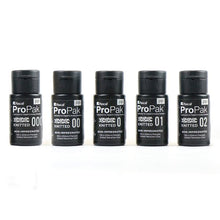
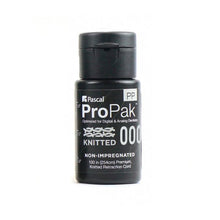
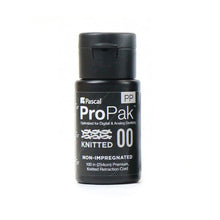
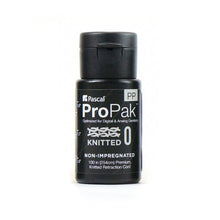
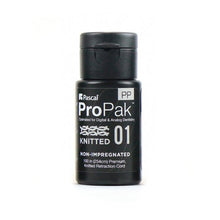
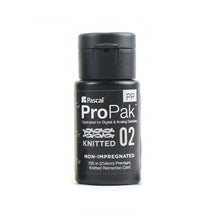
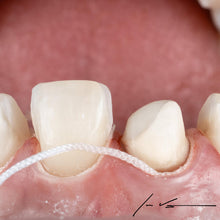
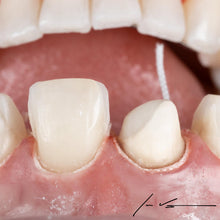
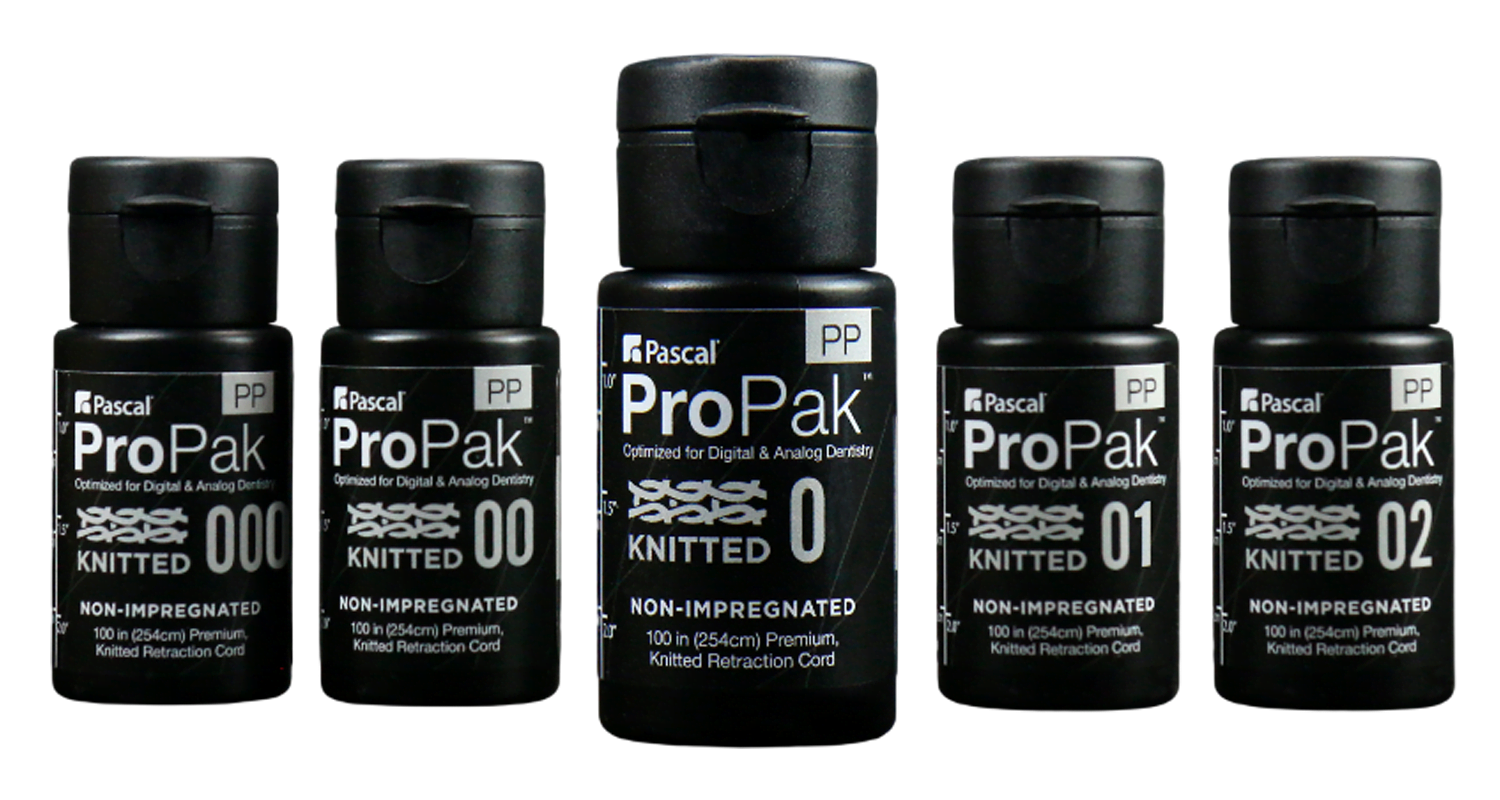
ProPak™ Retraction Cord – Knitted, Synthetic
Clean Sulcus. Clean Scan.
Optimized for Digital and Analog Dentistry. ProPak, fiber-free retraction cord supports artifact-free digital scans by reducing margin interference and minimizing foreign material that may contribute to localized tissue irritation.
Unlike traditional cotton cords, ProPak utilizes ProSorb™ Technology, a proprietary ultra-absorbent synthetic fiber that efficiently captures blood and saliva while retaining hemostatic agents exactly where they're needed. The result is a cleaner sulcus, improved moisture control, and more accurate digital impressions.
Why Clinicians Choose ProPak:
- Proprietary ultra-absorbent synthetic fiber with ProSorb™ Technology
- Optimized for digital impressions and conventional workflows
- Low-lint construction helps eliminate loose fibers
- Excellent absorption of blood, saliva, and hemostatic solutions
- Dye-free with no artificial pigments
- PTFE-free and contains no fluoropolymer materials
- Provides clean, dry margins for improved scan accuracy
- Suitable for crown and bridge, veneers, restorative procedures, and tissue management
Designed for today's leading intraoral scanners, including TRIOS®, iTero®, Medit®, and Primescan®, ProPak integrates seamlessly into digital workflows while delivering dependable performance for traditional impression techniques.
Curion is proud to be an authorized distributor of Pascal Dental products in Canada. This product is backed by the manufacturer's warranty.

 | ProPak — Optimized for Digital and Analog Dentistry
Clean Sulcus. Clean Scan. |
| Powered by ProSorb Ultra-Absorbent Fiber Technology A modern alternative to cotton cords and general-use PTFE tape. ProSorb Ultra-Absorbent Fiber Technology is engineered for dental clinical use and does not contain PTFE or other fluoropolymer-based materials. It is manufactured without added dyes and is designed to minimize lint and debris during intraoral procedures. PTFE products are engineered for plumbing—not patients. | 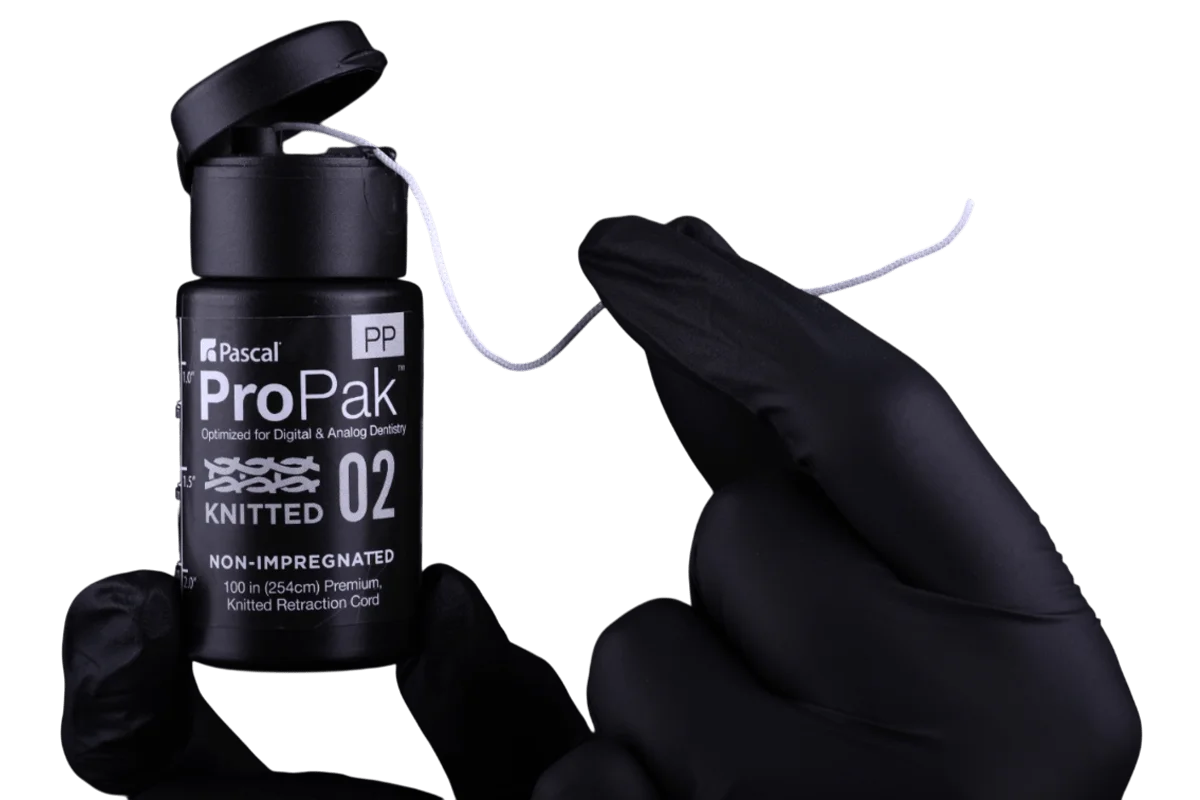 |
Contamination Study Integration
Evidence Matters: PTFE Tape Shows Contamination Risks
A recently obtained independent study found that PTFE tape sourced from hardware stores carried environmental contaminants, which were detectable when placed into simulated clinical environments.
These findings underscore an important distinction: |
Click the button below to view the full Independent PTFE Contamination Study.
Read More
COMPARISON TABLE | |||
| Feature | Cotton Cord | General-Use PTFE Tape | ProPak™ |
| Low-lint design | - | ✔ | ✔ |
| Designed for intraoral use | ✔ | - | ✔ |
| Contains PTFE / fluoropolymer materials | - | ✔ | - |
| Absorption performance (by design) | Medium-High | None | High |
| Debris-free removal | - | ✔ | ✔ |
| Handling precision | Medium | Low | High |
| Manufactured with added dyes or colorants | Varies by product | ✔ | - |
PTFE comparison refers to general-use PTFE tape manufactured for industrial applications and not labeled or intended for intraoral dental use.
Clean Sulcus. Clear Scan.
Digital intraoral scanners capture only what is visible. When loose retraction cord fibers remain in the sulcus, they can interfere with optical scanning, creating artifacts that obscure the true margin. Clinical reviews caution that residual cord fibers may compromise digital impression accuracy, while clinical studies show that effective gingival displacement improves margin visibility in definitive digital scans. Research on intraoral scanning also identifies foreign material as a recognized source of scan error, reinforcing the need for a clean sulcular environment.
Loose fibers from traditional cotton retraction cords may also remain in the sulcus and act as foreign material, contributing to localized tissue irritation and inflammation. Fiber-free retraction designs reduce the risk of detached filament retention, supporting cleaner sulcular conditions before digital impression capture.
Clinical References
References
1. Gingival Retraction: Past to Current Trends – A Review. Int J Dent Med Sci Res. 2023;5(3):606–612.
2. Nonsurgical Gingival Displacement in Restorative Dentistry. CDEWorld (Parkell).
3. Present Status and Future Directions: Soft Tissue Management in Restorative Dentistry.
PubMed Central (PMC).
4. El Ashry MF, Abdelkader SH, Hammad IA, et al. The efficacy of different gingival displacement methods for definitive digital impressions: A randomized controlled trial. J Dent. 2025;159:105841.
https://doi.org/10.1016/j.jdent.2025.105841
5. Revilla-León M, et al. Classification of scanning errors in intraoral digital impressions. J Prosthet Dent.
https://pubmed.ncbi.nlm.nih.gov/
6. Waerhaug J, Zander HA, Feuerstein RM. Effect of retraction materials on the gingival sulcus epithelium. J Prosthet Dent. 1961;11(3):514–521.
Frequently Asked Questions
ProPak™ is designed for dental intraoral use. Unlike general-use PTFE tape, which is manufactured for industrial applications and is not labeled or intended for intraoral use, ProPak™ is purpose-engineered for clinical dental procedures.
ProPak™ does not contain PTFE or other fluoropolymer-based materials.
ProPak™ is designed to absorb and retain commonly used dental hemostatic agents during intraoral procedures.
ProPak™ features a low-lint design and is engineered to minimize fiber shedding during dental procedures.